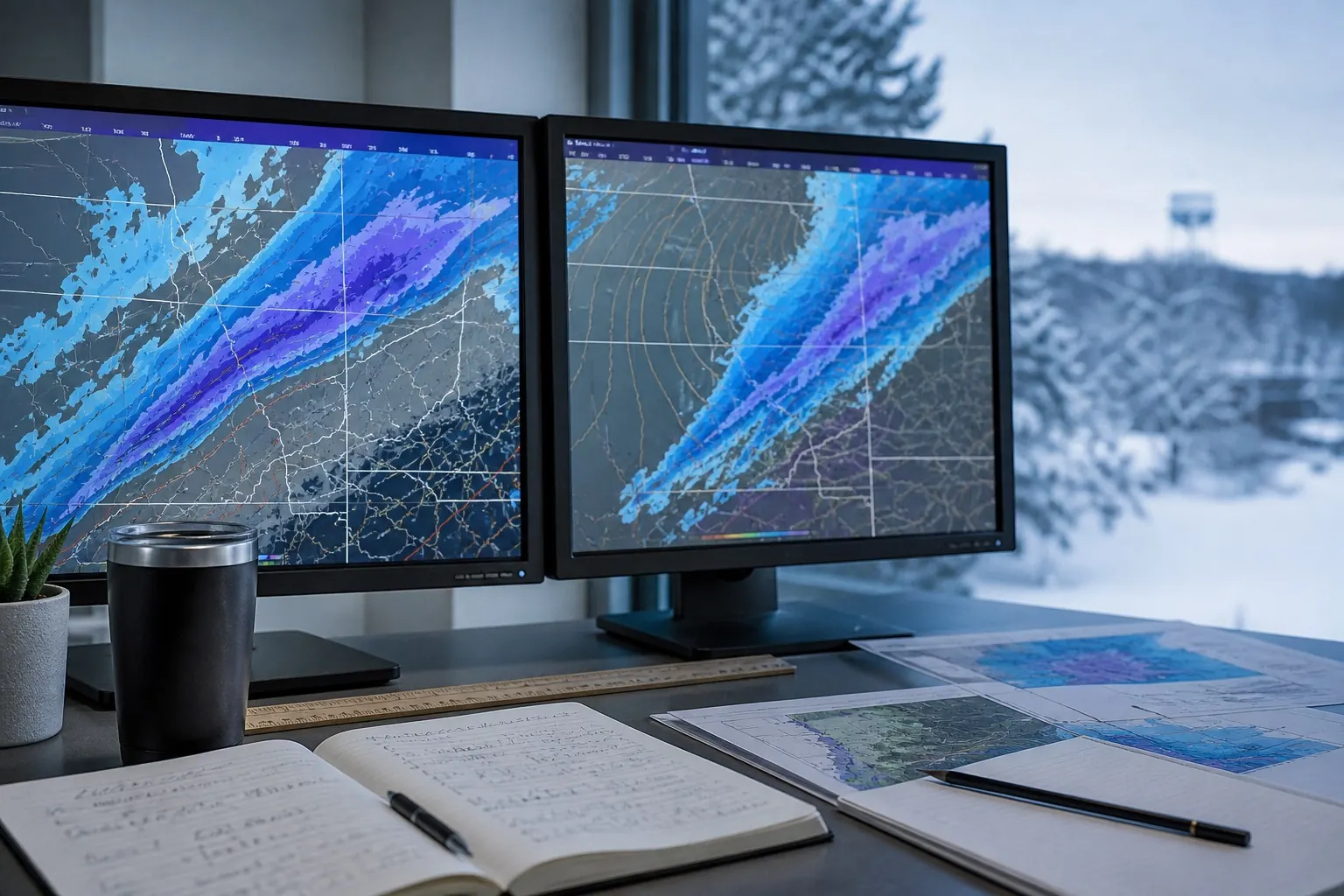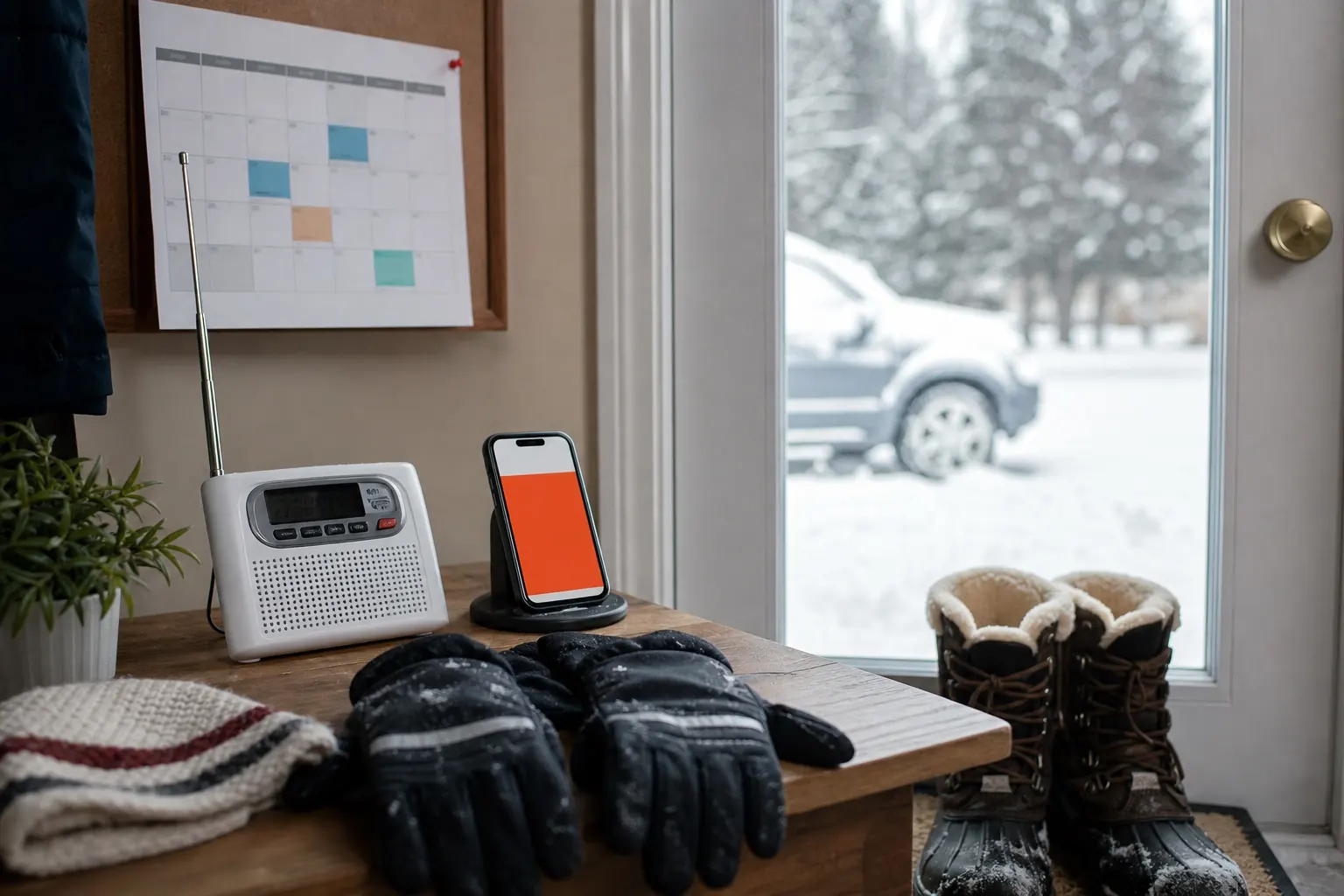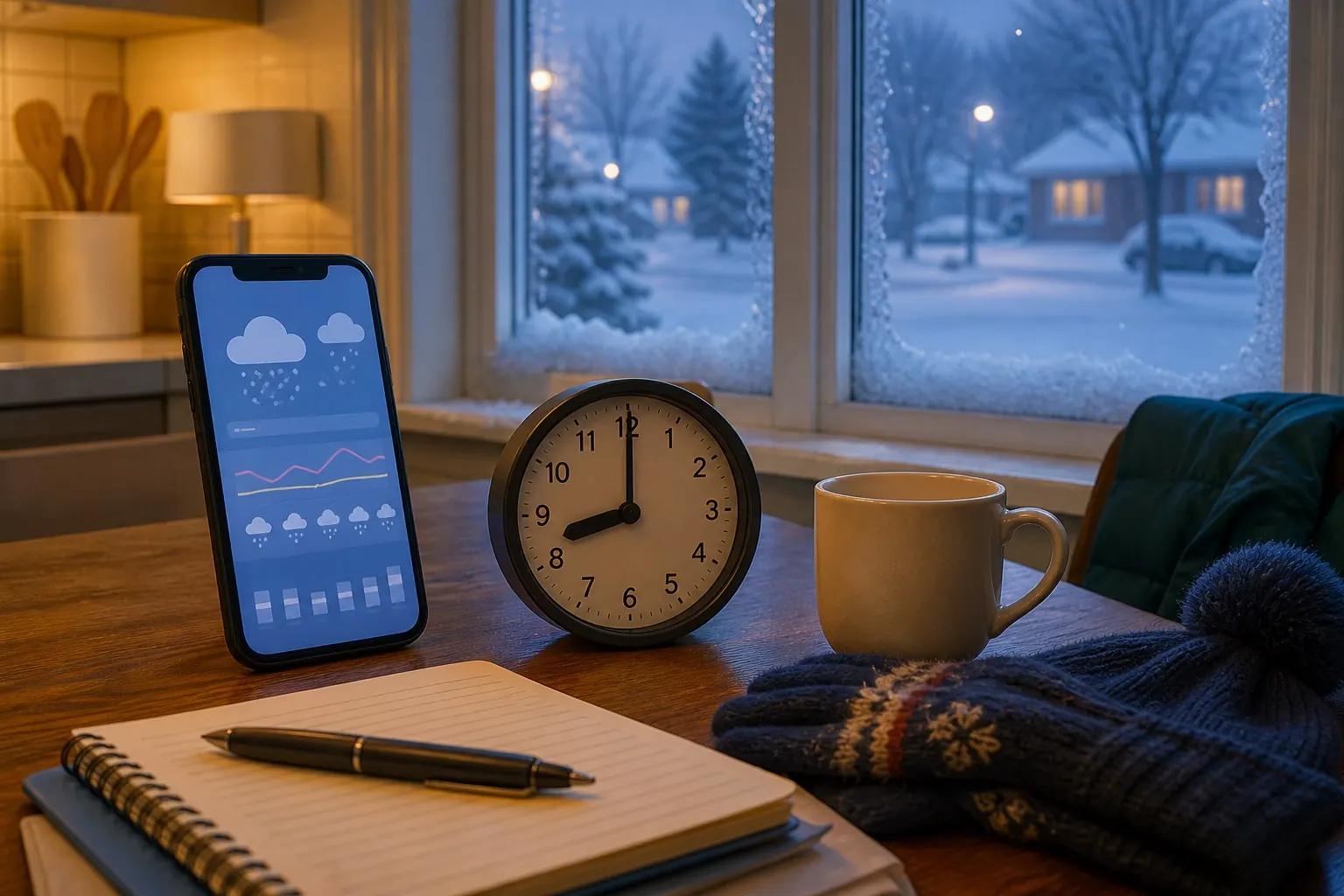
The most useful snow day routine has two checkpoints: one in the evening for planning, and one early in the morning for confirmation. It gives families time to prepare without confusing an evolving forecast with an official decision.
First check: the evening before
Check after the latest evening forecast update—often between roughly 7 and 10 p.m. local time. Look at the factor breakdown in the snow day calculator: expected snow, possible icing, low temperature, wind and how much falls overnight. The number is less important than understanding what is driving it.
Use that result to prepare a backup plan. Review childcare, charge devices and find the district's official alert channel. The snow day preparation checklist covers the practical details without encouraging last-minute panic.
Second check: before the morning decision window
Recheck early enough to adjust plans, but rely on the schedule used by your district. Overnight observations can reveal a warmer road surface, heavier snow band or more ice than forecast. A revised percentage is expected when the underlying weather changes; it is not evidence that the first forecast was dishonest.
When an earlier check is still useful
A forecast two or three days ahead can help with low-cost preparation, but it should not trigger irreversible decisions. Storm tracks and precipitation type can shift. Read how prediction uncertainty works before sharing an early result as if it were final.
What to compare beside the calculator
- your local weather service's watch, warning or advisory;
- district email, text, website and verified social channels;
- local road or transportation updates;
- changes in forecast timing since your last check.
Our winter alert guide explains why an official weather alert and a school announcement answer different questions. A warning describes a weather hazard; the district decides whether that hazard requires a closure, delay or other schedule change.
Simple routine: estimate in the evening, prepare if needed, refresh in the morning, then follow the district.