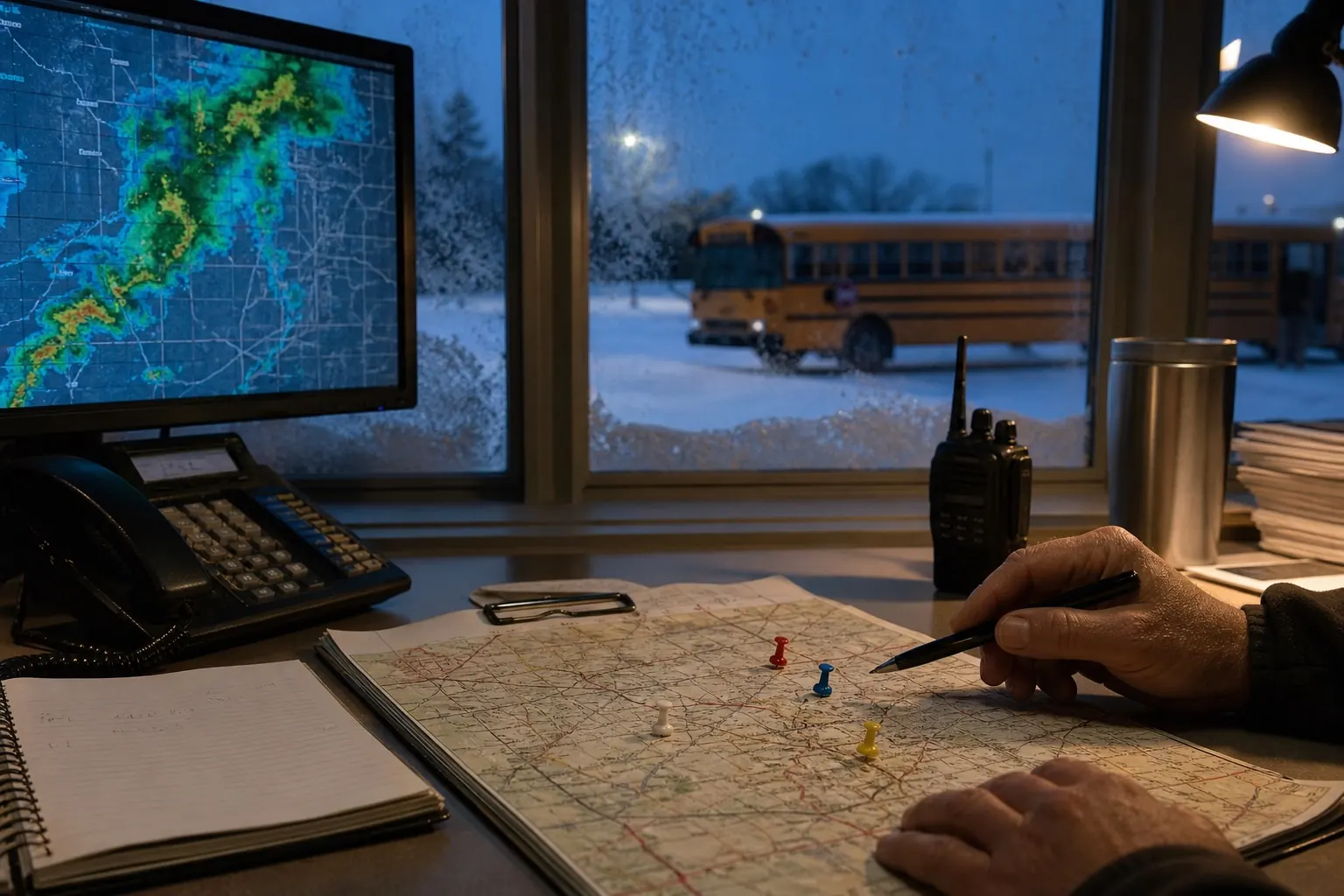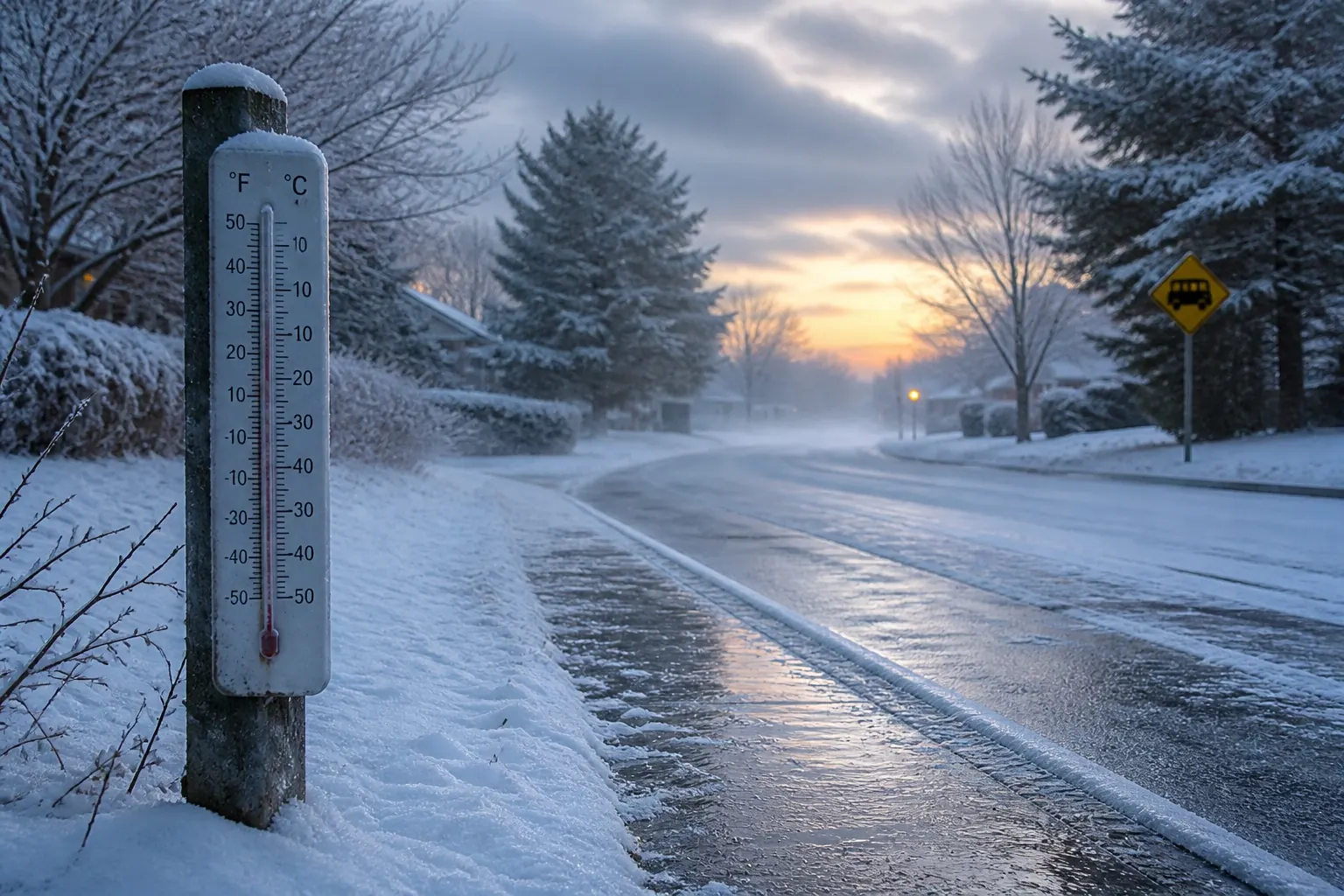
School closures are driven by travel impact, not snowfall alone. Ice, storm timing, wind chill, visibility and the ability to treat roads can turn a modest forecast into a difficult school morning—or make a larger total manageable.
1. Snowfall amount and intensity
Accumulation matters because it affects traction, plowing time and parking-lot clearing. But intensity matters too. A short burst near bus departure can cover recently treated roads faster than crews can revisit them. Our calculator methodology therefore considers both the daily total and the overnight school-morning window.
2. Ice and freezing precipitation
Freezing rain can make bridges, sidewalks and untreated roads dangerous before a deep layer forms. A calculator can identify a forecast pattern that favors icing, but it cannot observe every road surface. Check official winter weather alerts and local road reports when the forecast hovers near freezing.
3. Overnight and morning timing
Snow that falls from evening through the early commute leaves less time for treatment. A daytime event may instead raise early-dismissal concerns. If a storm is still changing, the best approach is to check once for planning and again near decision time.
4. Temperature and refreezing
Temperature affects whether roads remain wet, become slushy or refreeze. A warm afternoon followed by a rapid overnight drop can leave hidden ice. Persistent extreme cold can also affect students waiting outside, diesel buses and building systems even when new snowfall is limited.
5. Wind and visibility
Wind lowers apparent temperature and can move powder back across cleared roads. In open country, blowing snow may reduce visibility long after accumulation ends. The National Weather Service notes that lake-effect snow can form narrow, intense bands, so conditions may change quickly across a small area.
6. Local road and transportation context
A flat urban grid with frequent plowing is different from steep streets or long rural bus routes. That local context is why the same forecast can produce different choices. Read how school leaders combine weather with operations, then use the city prediction guide to interpret your area.
Forecast source note
The calculator reads daily and hourly variables from Open-Meteo's forecast API documentation, including snowfall, precipitation probability, temperature and wind. Those are model outputs, not direct road observations.