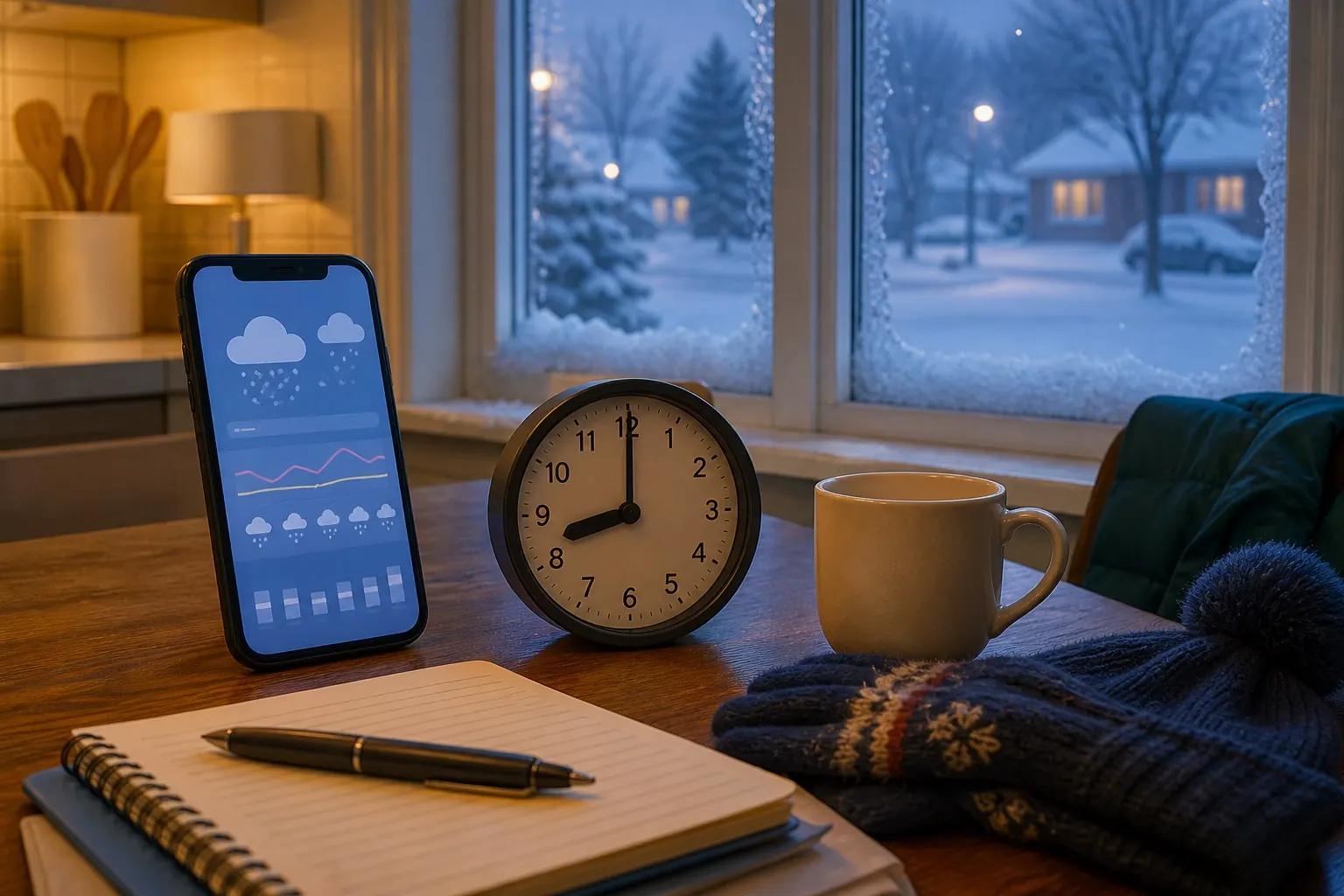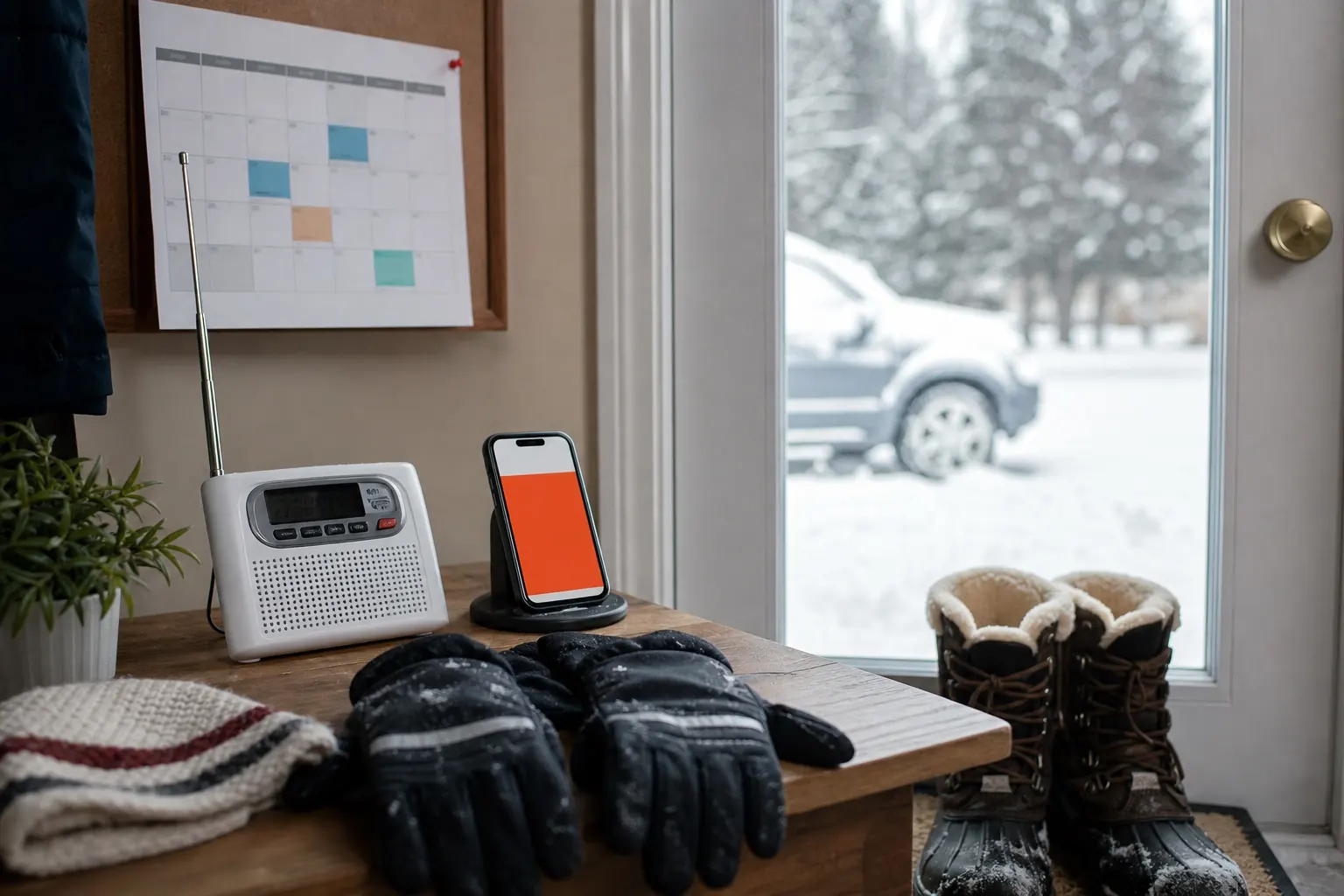
Snow day preparation is mostly ordinary planning done a little earlier: know where the official notice will appear, prepare childcare or remote learning, and make sure the home and commute are ready for winter conditions.
The evening-before checklist
- Confirm the district's website, text alert or email channel.
- Check the calculator and note which weather factors are driving the estimate.
- Discuss childcare and work plans if school closes or starts late.
- Charge phones, laptops and a backup power bank.
- Set out boots, warm layers and reflective items if travel is still expected.
Use the evening-and-morning check schedule so you are not refreshing every few minutes. Forecasts will evolve, but constant checking rarely improves the plan.
Plan for more than a full closure
A district may announce a delayed start, transportation cancellation, early dismissal or remote instruction. Ask what each status means for your family. If devices may be needed, review the district platform and save essential contact information in advance. Our guide to remote learning on snow days explains the common models.
Home and travel basics
Keep walkways reasonably clear, use safe heating practices and make sure carbon monoxide alarms work. If travel is necessary, follow official advice, clear the entire vehicle and allow more distance. A school prediction is not a road-safety assessment; read current winter alerts and local travel information.
What to do in the morning
- Check the district's official announcement first.
- Review any overnight change in snow, ice or timing.
- Confirm childcare, work and transportation arrangements.
- Share only verified closure information, not screenshots of an estimate without context.
Keep the plan proportional. An elevated estimate means “prepare,” not “the district has already decided.”
If you want to understand what administrators are checking during the same hours, read how the school closure decision is made.