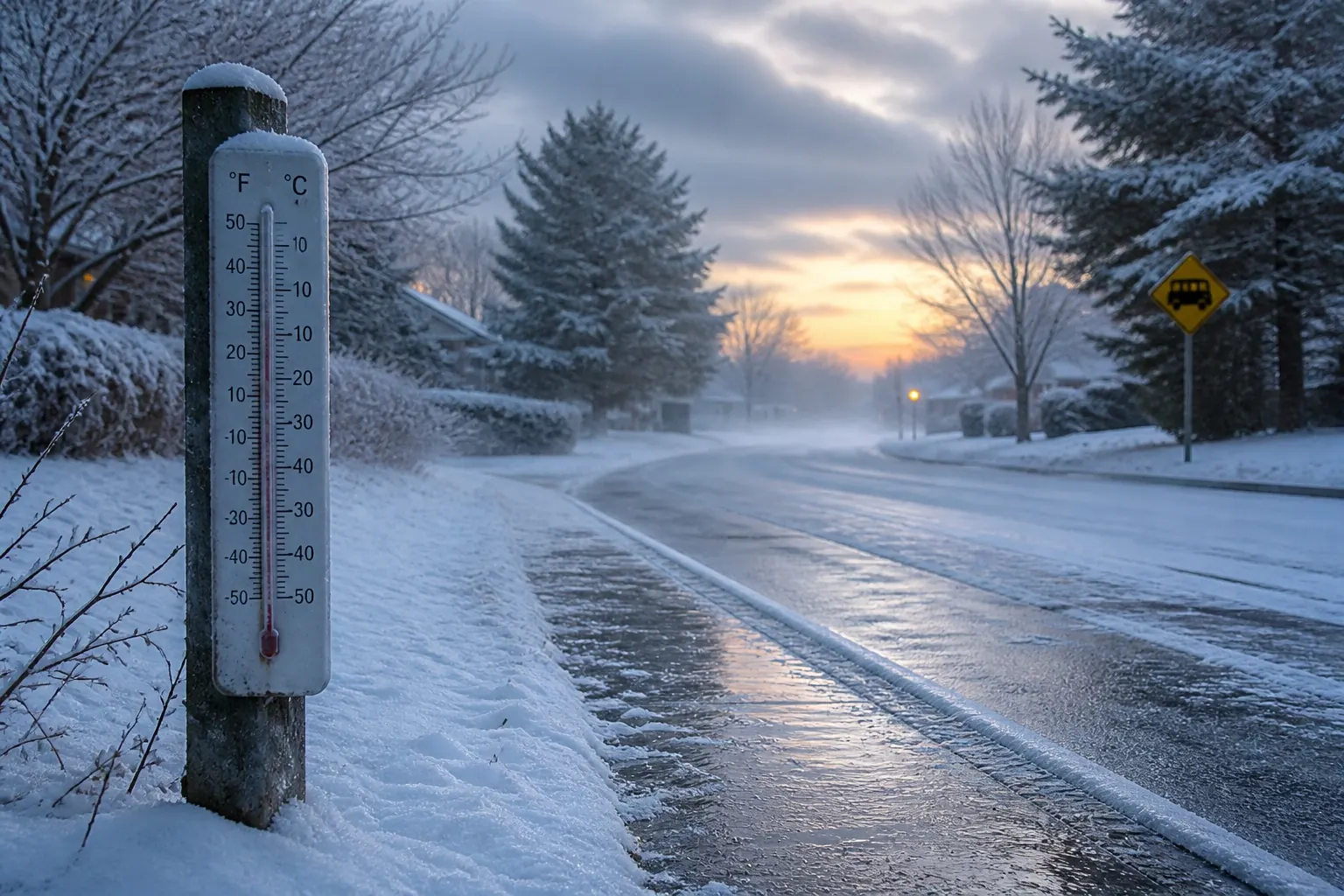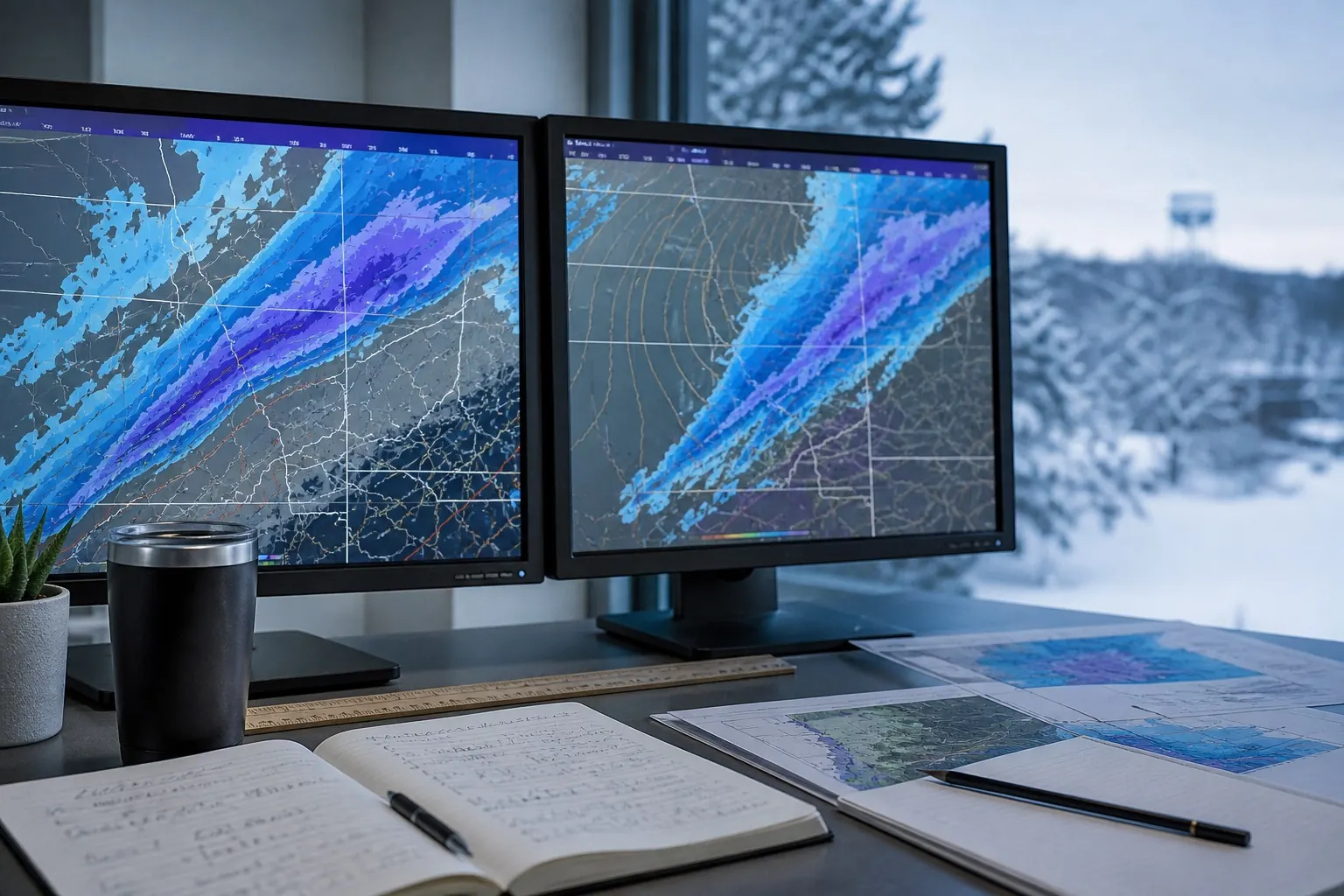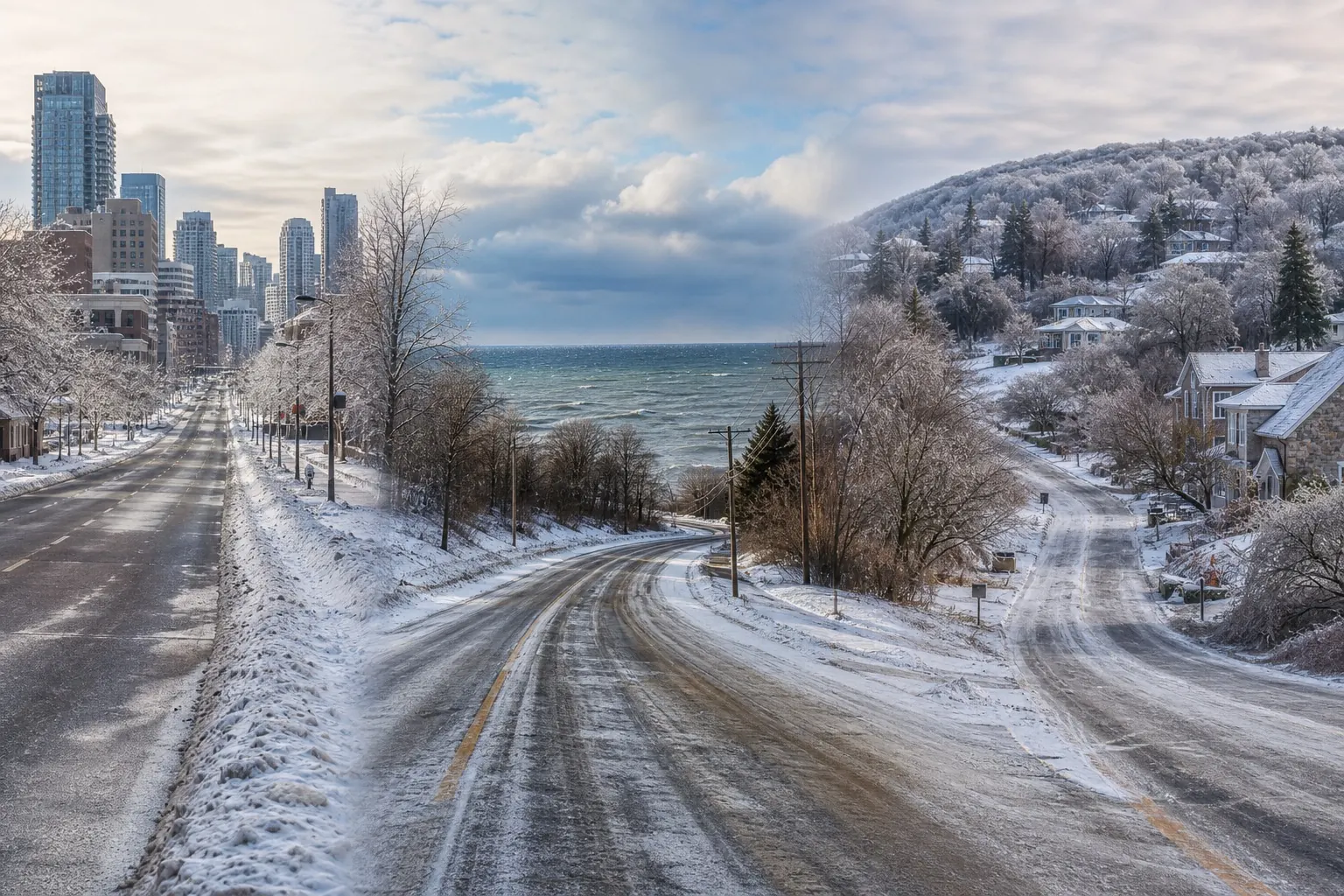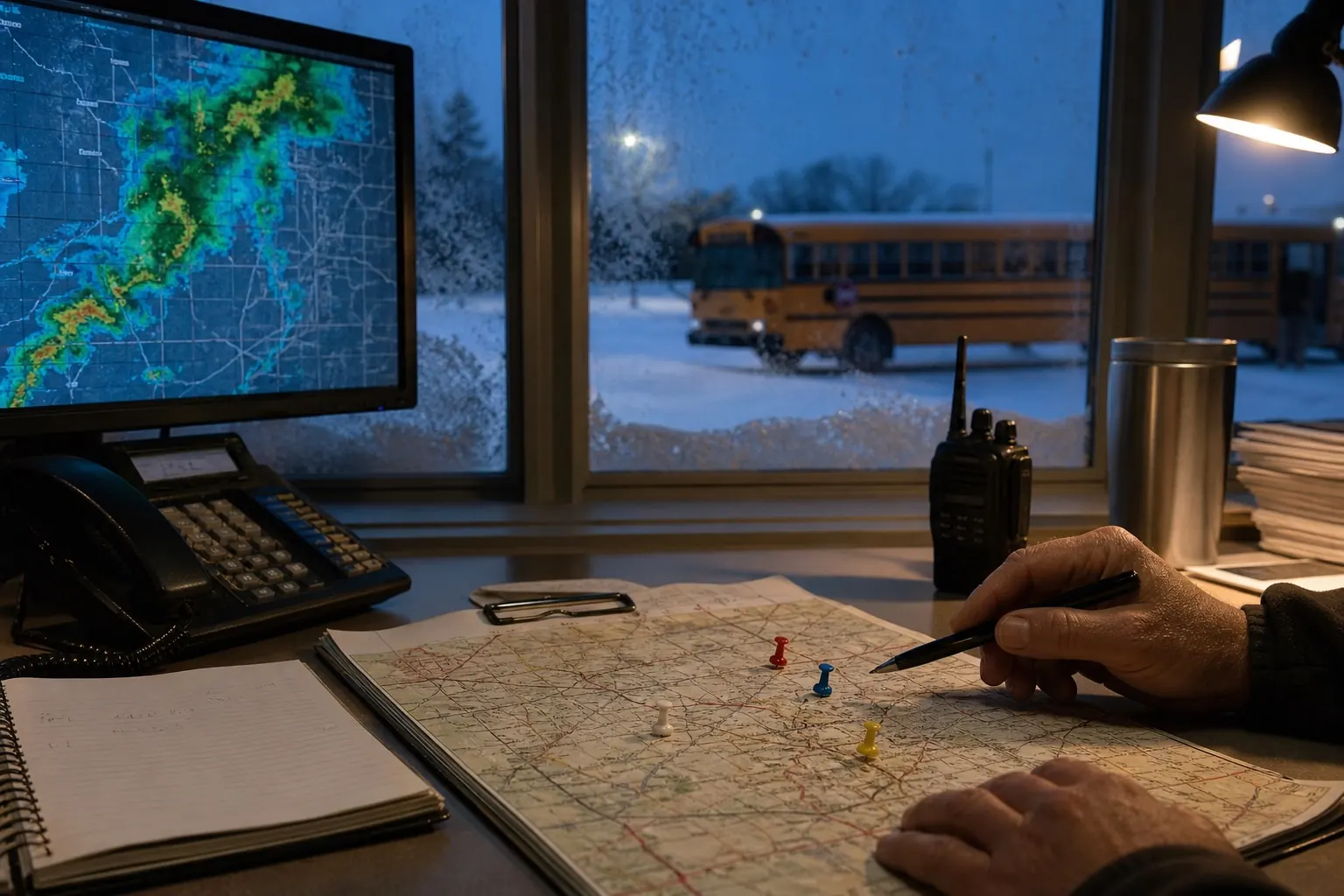
A superintendent rarely looks at one snowfall number and makes an immediate call. The decision is a risk assessment across an entire district: roads, bus routes, sidewalks, staffing, buildings and the timing of the storm all have to be considered before students begin traveling.
Safety across the whole district comes first
Conditions outside one home may look manageable while rural roads, hills or bridges elsewhere in the district are slick. Transportation teams may inspect representative routes before dawn, talk with road crews and compare the forecast with what is actually accumulating. This is one reason nearby districts can reach different conclusions; our guide to regional snow day thresholds explains how infrastructure changes the outcome.
Buses create their own constraints. They stop frequently, travel secondary roads and must have enough traction and visibility to operate safely. Districts also consider whether students can stand outside at bus stops, whether parking lots and sidewalks can be cleared, and whether staff can reach each building.
Timing can be more important than the final total
Three inches that ends before midnight may be easier to manage than one inch falling quickly during the morning commute. Overnight snow compresses the treatment window, and freezing rain can create serious travel problems with little visible accumulation. See the weather factors that influence closures for a closer look at snow, ice, cold and wind.
A useful prediction asks two questions: what weather is forecast, and when will its worst effects overlap with school transportation?
Who contributes to the decision?
The final authority varies by district, but information often comes from several groups:
- transportation directors and bus contractors;
- local public works or highway departments;
- weather services and local meteorologists;
- facilities teams responsible for heat, power and walkways;
- neighboring districts facing similar conditions.
A district may also choose a delayed start, early dismissal or remote instruction instead of a full closure. The policy options are not the same everywhere, especially after the growth of remote learning on weather days.
Why a calculator cannot know the final answer
A public calculator can translate forecast data into a consistent planning estimate. It cannot see a blocked rural road, a failed boiler, a driver shortage or a superintendent's last-minute judgment. That is why our snow day calculator publishes its factor weights and labels the result as an estimate.
Use the percentage to decide whether a backup plan is worth preparing. Then follow the evening-and-morning forecast routine and rely on your district's official channels for the actual decision.